Pet Invertebrates You Can Keep Without Feeding Live Prey
Keeping invertebrates doesn’t have to involve feeding live prey.
There are plenty of fascinating species that can be kept without feeding live prey at all – from stick insects quietly working their way through a branch of bramble to cockroaches, isopods, millipedes, snails and other small creatures that are surprisingly easy to become attached to once you start watching them properly.
That was one of the things that drew me towards keeping more invertebrates in the first place.
I love observing them, setting up their enclosures and watching the small changes that happen over time, but I don’t particularly want a collection where every animal needs another live animal to eat.
Fortunately, there’s a lot more choice than you might think.
What Does “Without Live Prey” Actually Mean?
For this site, I use “without live prey” to mean invertebrates that can be kept without having to provide live feeder insects as part of their normal diet.
That doesn’t necessarily mean every species is strictly herbivorous.
Some will eat:
- leaves and other plant material
- fruit and vegetables
- fungi and decaying organic matter
- prepared insect foods
- grains or dry foods
- dead animal protein or other non-live foods
The important distinction is that you don’t need to keep and feed live prey animals to them.
It’s still important to research the exact diet of any species before bringing it home. Two animals that look fairly similar can have very different requirements.
Stick Insects
Stick insects are probably one of the clearest examples.
Most commonly kept species feed on leaves, although the exact food plant varies between species. Depending on what you keep, suitable plants can include bramble, privet, rose, oak, eucalyptus or other specific food plants.
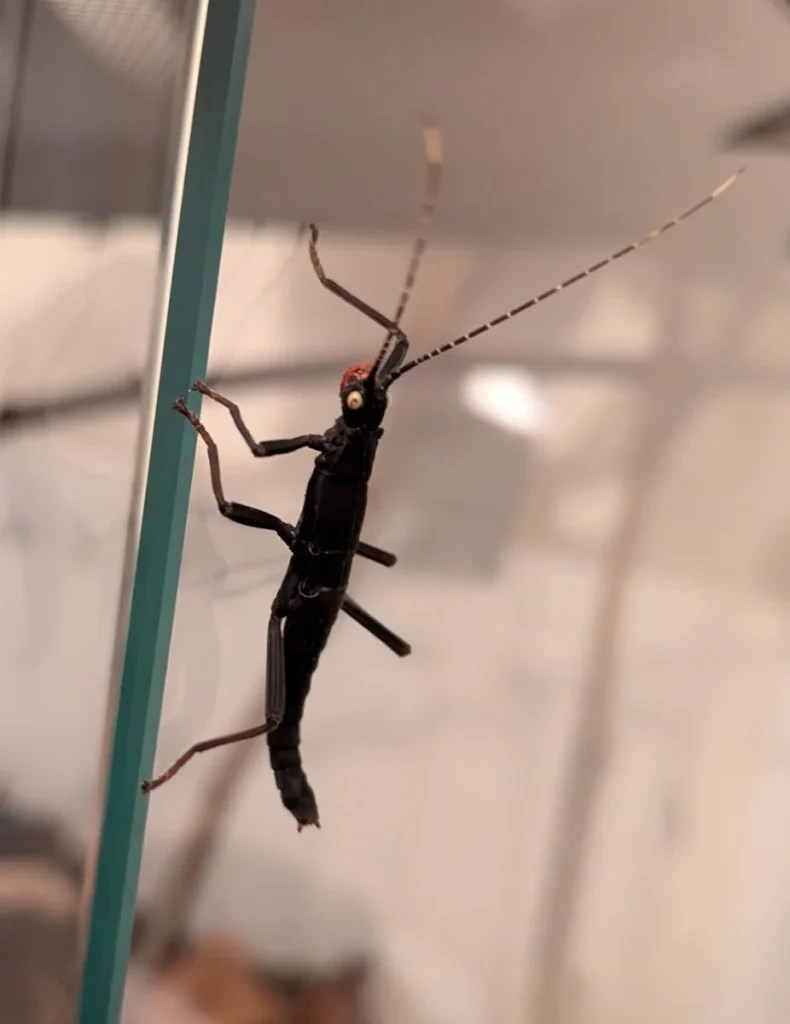
They’re fascinating animals to observe because so much of their life revolves around camouflage, moulting and gradual changes in size.
Some species are wonderfully dramatic. Others are so committed to pretending they’re a twig that you can stare into the enclosure for several minutes before realising the “branch” you were looking at has legs.
The main challenge usually isn’t feeding live prey – it’s making sure you have a reliable supply of the correct pesticide-free food plant.
Cockroaches
Cockroaches are one of the groups that completely changed the way I look at feeder insects.
There are a huge number of species, and many can be kept on a mixture of plant-based foods, vegetables, fruit and suitable dry foods rather than live prey.
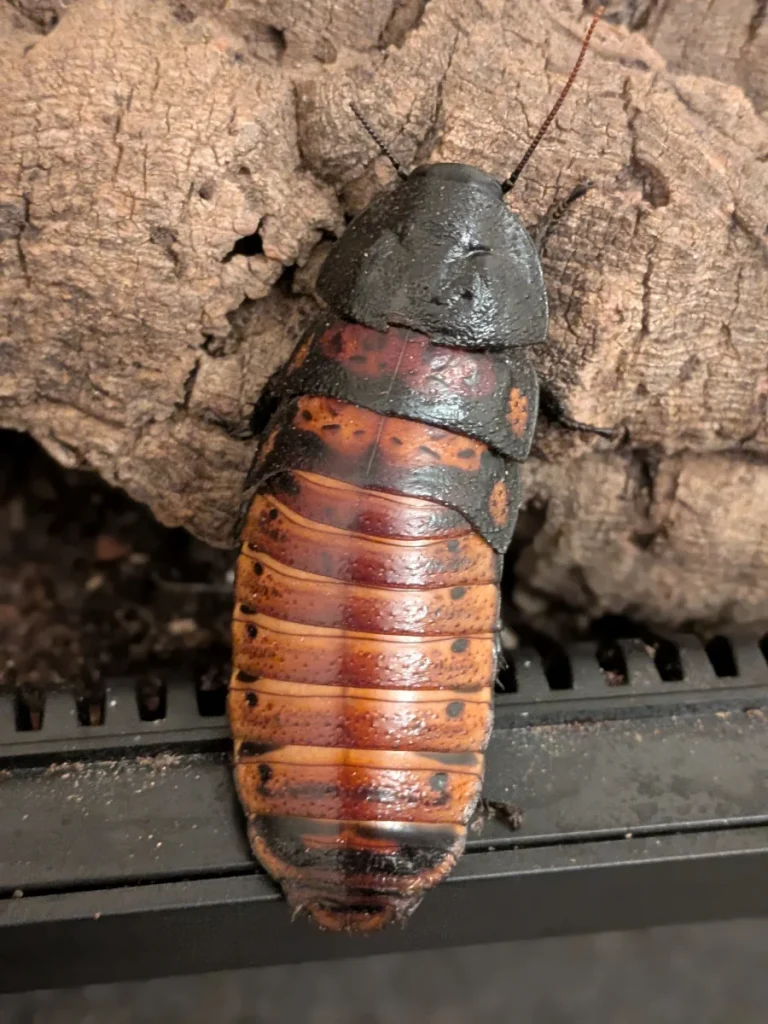
They can also be far more individual than people give them credit for.
Some spend most of their time hidden away. Others seem determined to investigate everything you do. Once you’ve kept them for a while, it becomes very difficult to see them simply as “feeders”.
As with any other group, diets vary between species, so a food list that works for one type of cockroach shouldn’t automatically be copied for another.
Isopods
Isopods are another good option for anyone interested in small animals that don’t require live prey.
They’re detritivores, which means much of their diet comes from decaying plant material and other organic matter.
Leaf litter and decaying wood usually form an important part of an isopod setup, with other foods provided according to the needs of the species.
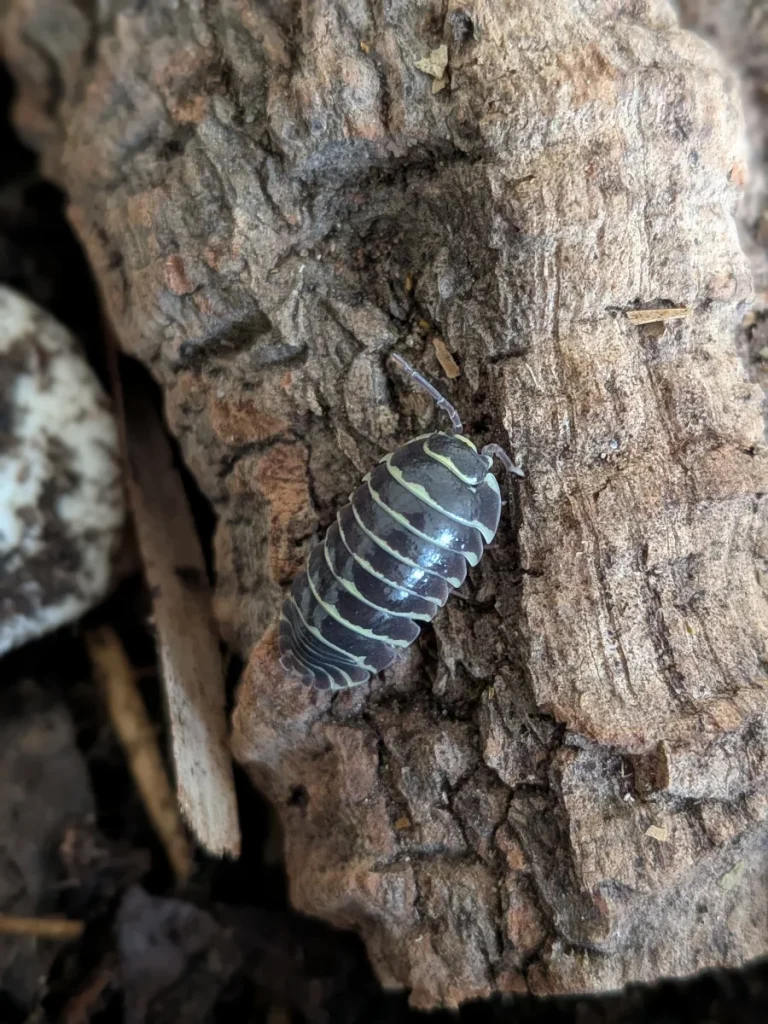
They’re often kept as part of bioactive enclosures, but they’re interesting enough to keep in their own right.
Different species vary enormously in colour, shape and behaviour, and a colony gives you plenty to observe as it grows.
Springtails
Springtails are tiny, but they deserve more attention than they usually get.
Most people encounter them as part of a bioactive clean-up crew, where they help break down mould, fungi and decaying organic material.
They don’t need live prey, and once you start looking closely at a healthy colony, there’s quite a lot going on.
They’re also a useful reminder that an animal doesn’t have to be large or dramatic to be interesting.
Some of the smallest things in an enclosure are doing the most work.
Millipedes
Millipedes are another good choice for keepers who want interesting invertebrates without live prey.
Most commonly kept millipedes feed on decaying plant matter, leaf litter, rotting wood and suitable supplementary foods.
They spend a lot of time digging, hiding and working through the substrate, so a good setup is really about creating the right environment rather than constantly providing obvious meals.
Different species vary in size, humidity needs and substrate depth, but one thing they generally have in common is that the substrate itself is an important part of both their habitat and their diet.
They’re a great example of an animal where the enclosure is doing a lot of the work.
Snails
Snails can also be kept without live prey, and there’s more variety between species than people sometimes expect.
Depending on the species, their diet may include leafy greens, vegetables, fruit, fungi, decaying plant matter and other suitable plant-based foods.
Calcium is also important for shell health, so they need an appropriate calcium source available.
They can be surprisingly active, especially in the right conditions, and there’s something quite relaxing about watching them explore an enclosure at their own pace.
As with every other group in this article, though, it’s still important to research the exact species before deciding what to feed or how to house it.
Grasshoppers and Katydids
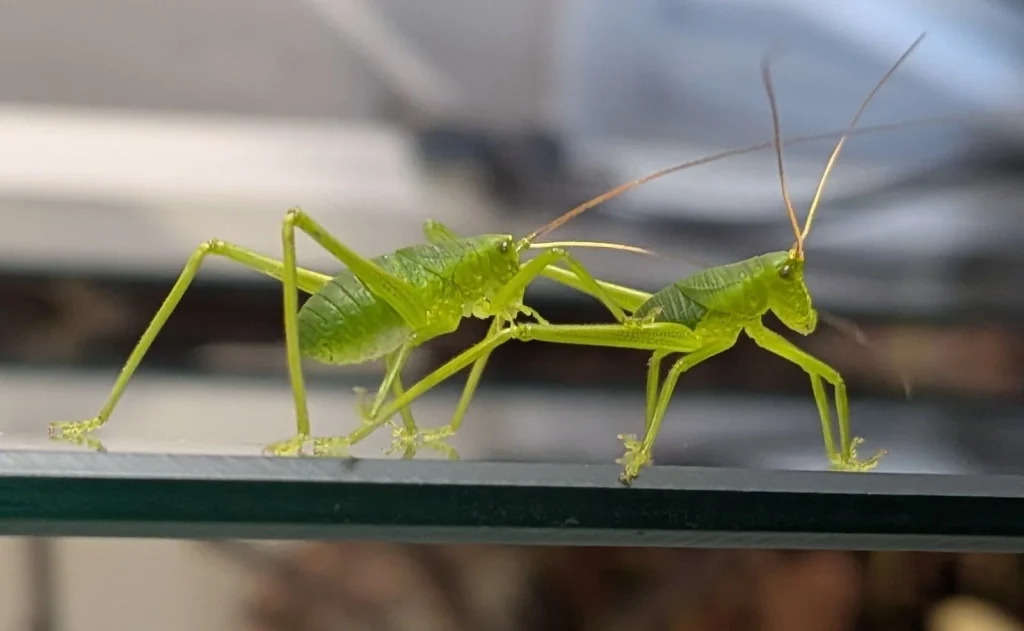
This is where it becomes especially important to look at the individual species rather than the whole group.
Some grasshoppers and katydids can be kept on plant material and other non-live foods, while others are omnivorous or predatory and may require animal protein or live prey.
So I wouldn’t recommend choosing one simply because another grasshopper or katydid species has a convenient diet.
Research the exact species first.
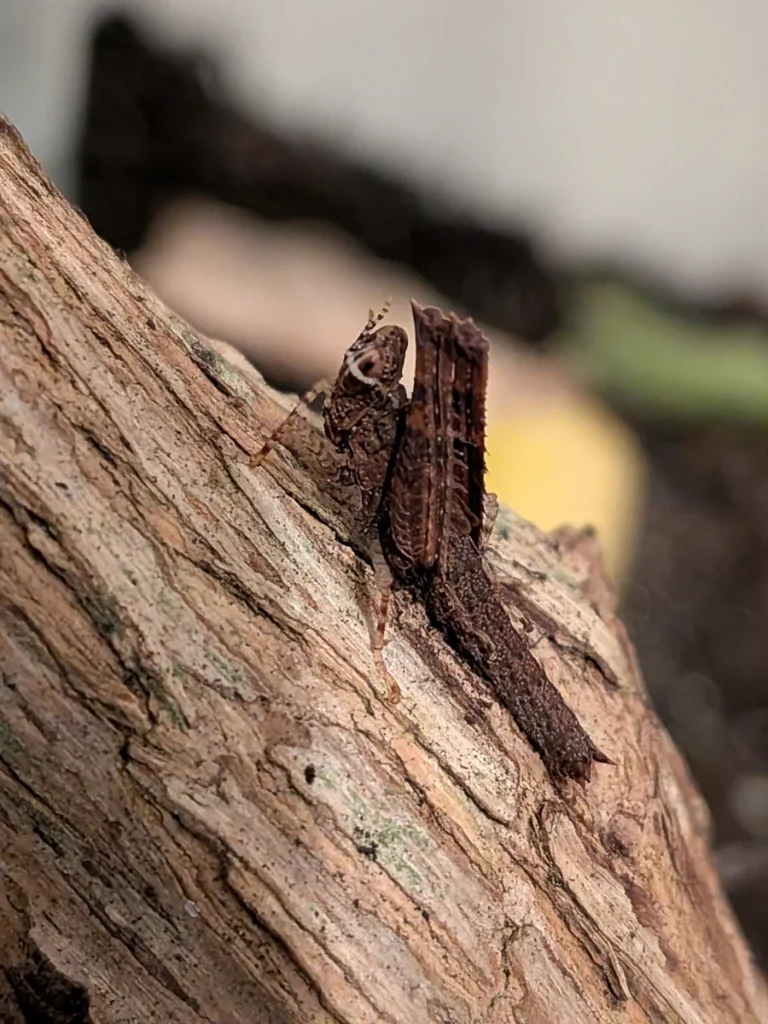
For the right species, though, they can be brilliant animals to keep. They’re active, responsive to their surroundings and often far more inquisitive than their appearance suggests.
Beetles and Larvae
Beetles cover an enormous range of diets, so this is another group where there isn’t one universal answer.
Some beetles and larvae can be kept entirely on plant-based foods, grains, decaying material or prepared diets.
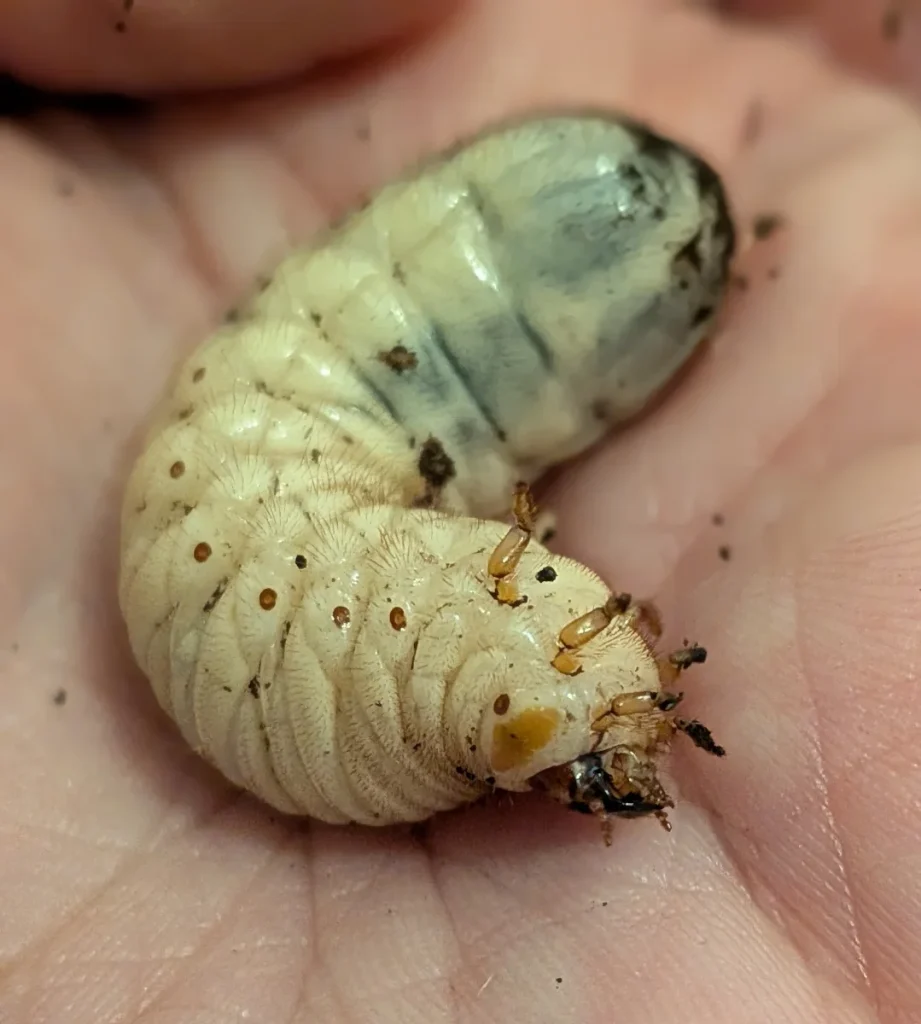
Mealworms are a familiar example. They’re usually thought of as feeder insects, but if you leave them to continue their life cycle, they pupate and eventually become darkling beetles.
Watching that transformation is one of the things I find particularly interesting about keeping feeder insects rather than viewing them only as food.
Again, the exact diet depends on the species.
What Should You Check Before Choosing an Invertebrate?
Diet is only one part of deciding whether an animal is right for you.
Before buying any species, I’d look into:
Adult Size
A tiny juvenile may eventually need considerably more space than you expect.
Enclosure Requirements
Some species need height for moulting, others need deep substrate, high ventilation, particular humidity levels or very specific temperatures.
Food Availability
A species might not eat live prey, but that doesn’t necessarily make its diet convenient. An animal that depends on a particular fresh food plant can be difficult to keep if you can’t source that plant throughout the year.
Lifespan
Some invertebrates live for only a few months, while others may be with you for several years.
Breeding
Certain species reproduce very readily. It’s worth knowing what you’ll do if your small collection suddenly becomes a much larger one.
Handling
Some species tolerate careful handling reasonably well, while others are much better observed inside the enclosure.
The easiest animal to feed isn’t necessarily the easiest animal to keep.
Food Plants Need Some Thought Too
For leaf-eating species, one of the biggest things I’ve learned is that having the right plant isn’t quite enough.
You also need to think about where it came from.
Plants bought from garden centres, supermarkets or nurseries may have been treated with pesticides or systemic insecticides. Something that is perfectly safe to have in the garden may not be safe to feed directly to an insect.
Where possible, I prefer to know the history of plants before using them as food and to grow reliable food plants specifically for the animals.
It takes a little more planning, but it removes a lot of uncertainty.
What About Rescued Feeder Insects?
Some of the animals on The Little Invert started out as feeder insects.
Crickets, locusts, cockroaches and mealworms are normally discussed in terms of what eats them, but they’re still animals with their own life cycles and behaviours.
Giving them a second chance has become a big part of what I enjoy documenting.
Some can be kept comfortably without ever being used as feeders, although their exact diets and care still depend on the species.
That side of the hobby has its own section here because I think they deserve a little more attention than they usually get.
You Don’t Need Live Prey to Keep Interesting Invertebrates
There’s a huge variety of invertebrates available to keep, and avoiding live prey doesn’t narrow the hobby down nearly as much as you might expect.
You can still watch animals moult, grow, reproduce, change colour, transform completely and develop their own surprisingly recognisable habits.
For me, that’s the interesting part.
I’m much more interested in what an animal does when you give it the right environment and enough time to simply get on with being itself.
As The Little Invert grows, I’ll be adding individual care guides, enclosure information, food plant guides and species-specific articles for the animals featured here.
And, naturally, all the smaller moments that happen in between will end up in the Invert Journal.